

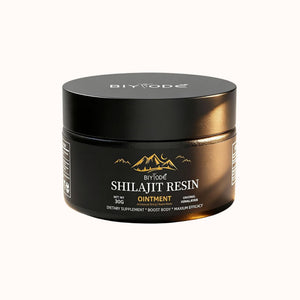
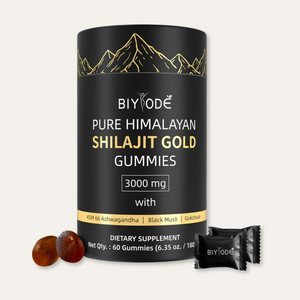



Shilajit Gummies for Women: Navigating Energy Swings Through Every Life Stage
Biyode Research team
introduction:
If you've ever felt like your energy runs on a schedule you didn't choose — sharp and steady one week, foggy and flat the next — you're not imagining it. Cyclical hormonal shifts, the slower slide into perimenopause, and the general demands of a busy life all draw on the same underlying resource: your body's capacity to produce and manage cellular energy. Shilajit gummies have become a popular way to support that capacity directly, without the taste and mess of traditional resin. This guide looks at how shilajit is thought to work across different life stages, what the research actually supports, and how to use gummies effectively and safely.
The Common Thread Behind "Different" Symptoms
Fatigue during PMS. Brain fog in the days before a cycle. The harder-to-pin-down exhaustion of perimenopause. These are usually discussed as separate issues, each with its own explanation and its own remedy aisle. But there's a simpler way to look at them: all three draw heavily on your body's mineral status and cellular energy production, two things that are easy to overlook because they don't show up on a typical checkup unless something is seriously out of range.
Hormone synthesis and regulation depend on specific minerals functioning as cofactors — zinc in ovulatory processes, magnesium in cortisol regulation, selenium in thyroid hormone metabolism, among others. When intake or absorption of these minerals is inconsistent — which is common, since modern diets and soil-depleted produce don't always deliver what a food label suggests — the systems that depend on them can become less efficient, and fatigue is often one of the first places that shows up.
Shilajit is a naturally forming mineral resin, created over long periods as plant matter decomposes under pressure in high-altitude mountain rock. Its relevance here comes down to two active compounds:
- Fulvic acid, which has a chelating property that converts minerals into an ionic form more readily absorbed by cells, and which is also studied for supporting the efficiency of mitochondrial energy production.
- Dibenzo-α-pyrones (DBPs), compounds studied for their potential role in supporting the mitochondrial electron transport chain — the process your cells use to generate ATP.
The pitch, in plain terms, is that shilajit isn't trying to patch a single symptom; it's aiming at the underlying mineral and energy-production layer that several hormone-related symptoms draw from.
Cycle-Related Energy Dips: What's Actually Going On
During the luteal phase (the back half of the menstrual cycle), progesterone rises and, for many people, energy and mood shift alongside it. This is a normal physiological pattern, not a malfunction — but it can be more pronounced when mineral status is already running low, since magnesium in particular plays a role in how the body buffers cortisol and manages the stress response during this window.
This is where the "energy, not stimulant" distinction matters. Shilajit doesn't work like caffeine — there's no jolt and no crash, because it isn't acting on the nervous system the way a stimulant does. Instead, its proposed effect is a steadier, cellular-level improvement in how efficiently your body converts food and oxygen into usable energy. Some people describe this as feeling less "wiped out" by the same daily demands, rather than feeling amped up — a distinction worth understanding before trying it, since the effect (if you notice one) will feel different from a pre-workout or an energy drink.
Perimenopause: A Different Kind of Depletion
Perimenopause — the transitional years leading up to menopause — brings a gradual decline in estrogen, and with it, changes that go beyond hot flashes and cycle irregularity. Two changes are particularly relevant to shilajit's proposed mechanisms:
- Bone mineral density decline. Estrogen plays a protective role in bone maintenance, and its decline is directly linked to increased bone turnover and, over time, higher osteoporosis risk.
- Increased oxidative stress and inflammation, both of which are implicated as drivers of that bone loss process, separate from the mineral-supply question alone.
This is the area where shilajit has its strongest specific clinical backing. A 2022 randomized, double-blind, placebo-controlled trial (Pingali et al., published in Phytomedicine) studied postmenopausal women with osteopenia and found that the group taking shilajit showed a dose-dependent preservation of bone mineral density compared to a placebo group that continued to decline, alongside measurable reductions in inflammatory and oxidative stress markers. This is a genuinely well-designed trial and one of the few pieces of shilajit research conducted specifically in women — worth taking seriously if bone health is a concern for you.
It's important to be precise about scope here: this trial studied bone density specifically in postmenopausal women with osteopenia. It doesn't automatically extend to every symptom associated with perimenopause (hot flashes, sleep disruption, mood changes) — those broader claims are based on smaller studies, plausible mechanisms, and traditional use rather than trials of this caliber.
Why Gummies Have Become the Preferred Format for This Use Case
Raw shilajit resin is potent but genuinely inconvenient. It has a strong, bitter, earthy taste that most first-time users find jarring; it needs to be dissolved in warm water or tea before use; and its texture shifts with temperature — hard when cold, very soft when warm — which makes handling it a small production rather than a quick daily habit.
That inconvenience matters more than it might seem, because shilajit's benefits (per the research above) are cumulative — most users describe some energy change within days, but the more meaningful effects, including anything bone- or hormone-related, take 2–3 weeks of consistent daily use to show up. A supplement that's a hassle to take consistently is a supplement that gets skipped, and skipped doses undermine exactly the kind of steady use this research is built around.
Shilajit gummies solve this directly:
- Standardized, pre-measured dosing — no eyeballing a pea-sized amount of sticky resin.
- Masked bitterness — natural fruit flavoring covers the taste that turns many people off resin.
- No prep — chew and go, no dissolving, no waiting for tea to cool.
- Travel-friendly — no risk of resin melting or leaking in transit the way raw product can.
The active compound profile doesn't change based on format. What changes is how realistic it is to actually take it every day for the weeks needed to know whether it's doing anything for you.
What to Look for in a Shilajit Gummy
Because shilajit sourcing has a well-known authenticity problem — low-grade powders, fillers, and even inert waxes like ozokerite sold under "Himalayan shilajit" branding — quality verification matters more here than for many supplements:
- A named, standardized extract with a stated fulvic acid percentage, not vague "shilajit powder" wording.
- Third-party lab testing for heavy metals (lead, arsenic, mercury, cadmium), since shilajit's rock-strata origin makes contamination a genuine risk in unpurified sources. Look for a certificate of analysis from an independent lab.
- Transparent sourcing, naming a specific high-altitude region (Himalayan or Altai sources are the most commonly referenced).
- A short ingredient list — extract, a natural sweetener, a gelling agent, and natural flavoring, without a long tail of artificial additives.
- Grounded, non-dramatic claims — be wary of marketing promising fast or dramatic hormonal "fixes"; the legitimate research timeline here is weeks, not days.
How to Use Shilajit Gummies Across Life Stages
- Standard dosing is typically equivalent to a 250–500mg resin serving, but always check the specific product label, since potency and gummy size vary by brand.
- More is not better. Exceeding the labeled dose doesn't accelerate results and isn't recommended.
- Daily consistency matters more than timing — morning with breakfast is common and convenient, but there's no strong evidence one time of day is meaningfully better than another for this purpose.
- Give it a fair trial. Plan on at least 2–3 weeks of daily use before deciding whether it's making a difference, in line with the timelines used in the underlying research.
Global Context: What the Data Shows
Source: Our World in Data — open global research and statistics (CC BY).

Healthy life expectancy — years lived in good health — diverges sharply from total lifespan in many regions. Cellular energy metabolism, including mitochondrial efficiency during sleep, is a foundational driver of the gap between living long and living well. Supporting the overnight ATP recharge cycle is one mechanism that may narrow that gap at the individual level.
Who Should Be Cautious or Avoid Shilajit
This section matters regardless of which life stage prompted your interest:
- Pregnancy and breastfeeding — not recommended, due to insufficient safety research in these populations.
- Children under 12 — not recommended, for the same reason.
- Hemochromatosis (iron overload) — shilajit's natural iron content makes it inappropriate here.
- Gout or active kidney stones — shilajit's mineral load warrants avoiding it or checking with a doctor first.
- Medication interactions — documented concerns include blood thinners (like warfarin), diabetes medications (shilajit may affect blood sugar), blood pressure medications, and immunosuppressants. Anyone on these should consult a healthcare provider before starting.
- General note: dietary supplements, including shilajit gummies, are not FDA-approved to diagnose, treat, cure, or prevent disease. That's a regulatory fact, not a marketing caveat — specific health claims aren't independently verified before a supplement reaches shelves, which is exactly why third-party testing and realistic expectations matter more than persuasive copy.
If you're dealing with significant or persistent symptoms — irregular cycles, severe fatigue, mood changes, or anything that concerns you day to day — those warrant a conversation with a doctor. Shilajit gummies are reasonably positioned as a supportive, foundational addition to your routine, not a substitute for medical evaluation.
Conclusion
Energy that swings with your cycle, or gradually erodes through perimenopause, isn't a series of unrelated complaints — it's often the same underlying system (mineral status and cellular energy production) showing strain from a few different directions at once. That's the reasoning behind shilajit's appeal for women specifically: rather than targeting one symptom in isolation, it's aimed at a foundational layer that several hormone-related experiences draw from.
The evidence supporting this is genuinely mixed in strength. The postmenopausal bone-density research is a solid, well-controlled clinical data point worth taking seriously. The broader claims about PMS, perimenopause energy, and general hormonal "balance" rest on smaller studies, plausible biochemistry, and long-standing traditional use — reasonable to explore, but not yet proven at a scale that would let anyone promise a guaranteed effect.
What shilajit gummies specifically solve is the consistency problem. Raw resin works, in principle, but its taste and handling make it genuinely hard to take every single day for the weeks the research suggests are necessary. A properly sourced, standardized, third-party-tested gummy removes that friction, which matters more than it sounds for a supplement whose value depends entirely on steady, sustained use rather than a single dose.
If you decide to try shilajit gummies, choose a transparent, tested brand, take it consistently for at least a few weeks before judging the results, keep an eye on the contraindications above, and bring it up with a healthcare provider if you're managing an existing condition, taking medication, or dealing with symptoms significant enough to need more than a supplement can reasonably offer.
"Sleep deprivation significantly alters ATP levels and energy metabolism in neuronal cells, suggesting that the restorative function of sleep is fundamentally tied to mitochondrial bioenergetics rather than simply elapsed rest time."
- Researchers, Journal of Neurochemistry, 2023 (PMID 37953684)
Experience the Biyode Difference
Pure, Eurofins-tested Products from the UNESCO-protected Golden Mountains of the Himalayas. 180,000+ customers across 33+ countries trust our quality.
What Our Customers Say on ★Trustpilot
 Verified
2026-07-23
Verified
2026-07-22
Verified
2026-07-23
Verified
2026-07-23
Verified
2026-07-22
Verified
2026-07-23
Frequently Asked Questions About Why 8 Hours of Sleep is Useless if Your Cells Can't Recharge
Is a high fulvic acid percentage always better
Will shilajit gummies definitely raise my testosterone?
Should I take shilajit instead of biotin, or alongside it?
Sources
- Heavy metal content and safety assessment of shilajit - Food and Chemical Toxicology, 2009
- Bhardwaj et al. (2022) Shilajit supplementation and mitochondrial respiratory chain complex activities
- Effect of shilajit on mitochondrial bioenergetics - Journal of Ethnopharmacology, 2012
These statements have not been evaluated by the Food and Drug Administration. This product is not intended to diagnose, treat, cure, or prevent any disease.