




Shilajit Gummies vs. Ashwagandha: Which Adaptogen Is Right for You?
Biyode Research team
Introduction:
Walk into the supplement aisle — or scroll through a wellness feed for five minutes — and you'll see shilajit and ashwagandha mentioned in the same breath constantly, often stacked together in the same "adaptogen bundle." That's not wrong, exactly, but it glosses over something important: these two natural compounds work through genuinely different mechanisms, address different root problems, and aren't simply interchangeable versions of the same idea.
This guide breaks down what each one actually does, how a shilajit gummy fits into that picture specifically, and how to figure out which one (or whether both) makes sense for your situation.
Two Different Problems, Two Different Tools
The core distinction is this:
- Ashwagandha (Withania somnifera) is an adaptogenic herb whose root is used in Ayurvedic medicine. Its primary studied mechanism involves modulating the body's stress-response system — specifically the Hypothalamic-Pituitary-Adrenal (HPA) axis — and it's most associated with helping regulate cortisol, the hormone released during stress.
- Shilajit is not an herb at all — it's a mineral-rich resin that forms over long periods from decomposed plant matter compressed in high-altitude mountain rock. Its studied compounds, primarily fulvic acid and dibenzo-α-pyrones (DBPs), are more associated with supporting cellular energy production (in the mitochondria) and delivering a broad spectrum of trace minerals in a bioavailable, ionic form.
Put simply: ashwagandha is often framed as turning down an overactive stress alarm, while shilajit is framed as refilling a depleted fuel tank. Those are two different problems — feeling wired, anxious, and overstimulated is not the same experience as feeling flat, drained, and mineral-depleted — and the research each compound is based on reflects that difference.
How Ashwagandha Is Thought to Work
Ashwagandha's studied effects center on withanolides, a group of naturally occurring steroidal compounds found in the plant's root. The proposed mechanisms include:
- Cortisol modulation — several clinical trials have examined ashwagandha's effect on serum cortisol levels, generally finding reductions compared to placebo in people reporting chronic stress.
- GABAergic activity — some research suggests ashwagandha may support signaling of GABA, an inhibitory neurotransmitter associated with a calming effect on the nervous system.
- General stress-resilience support — a number of systematic reviews have looked at ashwagandha's effect on self-reported stress and anxiety measures, generally finding a modest but consistent benefit across multiple trials.
Ashwagandha's effects tend to build gradually, with most research protocols running 4–8 weeks before drawing conclusions. Some people report mild drowsiness in the first days of use as the body adjusts, which is why it's sometimes recommended to start with an evening dose.

How Shilajit (and Shilajit Gummies) Are Thought to Work
Shilajit's studied compounds work through a different pathway entirely:
- Mitochondrial support — DBPs are studied for their potential role in supporting the mitochondrial electron transport chain, the process your cells use to generate ATP (cellular energy currency).
- Mineral delivery — authentic shilajit naturally contains a broad spectrum of trace minerals (commonly cited at 80+ types), many of which act as cofactors for enzymatic reactions throughout the body, including those involved in energy metabolism.
- Nutrient bioavailability — fulvic acid, shilajit's other primary active compound, has a chelating property that converts minerals into an ionic form the body can absorb more readily, and may improve absorption of other nutrients consumed alongside it.
Because these effects work at a metabolic and mineral level rather than a hormonal one, shilajit is generally framed less as a "calm down" supplement and more as a "rebuild your baseline energy" supplement — which is why it's typically discussed in the context of fatigue, burnout, slow recovery, and feeling generally run-down, rather than acute anxiety or racing thoughts.
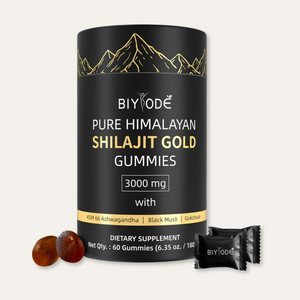
Shilajit gummies simply deliver this same resin-based compound profile in a pre-dosed, flavored, chewable format instead of the traditional bitter, tar-like resin dissolved in water. The active compounds and their proposed mechanisms don't change based on format — what changes is convenience, taste, and how consistently a person actually takes it day to day, which matters given that both shilajit and ashwagandha require weeks of steady use to assess.
Side-by-Side Comparison
|
Factor |
Ashwagandha |
Shilajit (Gummies) |
|
Source |
Root of an evergreen shrub |
Mineral resin from high-altitude rock strata |
|
Primary studied mechanism |
HPA-axis / cortisol modulation |
Mitochondrial ATP support, mineral delivery |
|
Key active compounds |
Withanolides |
Fulvic acid, dibenzo-α-pyrones |
|
Nutrient profile |
Plant alkaloids |
80+ trace minerals in ionic form |
|
Typically associated with |
Stress, anxiety, sleep onset issues |
Fatigue, burnout, slow recovery, low mineral status |
|
Typical timeline to notice effects |
4–8 weeks |
2–4 weeks |
|
Common early side effect |
Mild drowsiness in some users |
None widely reported beyond taste-related resin experience (less relevant for gummies) |
|
Format convenience (gummy vs. raw) |
Root extract capsule/gummy already common |
Gummy solves resin's taste and dosing-precision problems specifically |
How to Decide Which One Fits Your Situation
A simple, non-diagnostic way to think about it: what's the dominant complaint?
Consider ashwagandha if you mainly experience:
- Feeling "wired but tired" — mentally overstimulated despite being physically exhausted
- Racing thoughts that make it hard to fall asleep
- A strong physical reaction to everyday stress (tension, irritability, feeling on edge)
Consider shilajit gummies if you mainly experience:
- Deep, persistent physical or mental fatigue that doesn't feel stress-related
- Slow recovery after exercise, illness, or overall exertion
- A general sense of being mineral-depleted or "running on empty" without an obvious stress trigger
If you experience both — which is genuinely common, since chronic stress and depletion often coexist — many people choose to introduce one at a time rather than starting both simultaneously. This makes it easier to notice which one is actually making a difference for you, rather than attributing any change to "the combination" without knowing which part is doing the work.
Global Context: What the Data Shows
Source: Our World in Data — open global research and statistics (CC BY).

Healthy life expectancy — years lived in good health — diverges sharply from total lifespan in many regions. Cellular energy metabolism, including mitochondrial efficiency during sleep, is a foundational driver of the gap between living long and living well. Supporting the overnight ATP recharge cycle is one mechanism that may narrow that gap at the individual level.
Can You Take Shilajit Gummies and Ashwagandha Together?
There's no known direct conflict between the two, and the proposed mechanisms are complementary rather than competing — one works on the stress-response system, the other on cellular energy and mineral status. This pairing has a long history in Ayurvedic tradition, where combinations of adaptogenic substances were used together to support what's traditionally described as overall vitality.
That said, "complementary" and "clinically proven synergistic" are different claims. Some preclinical (non-human) research has looked at combined adaptogen formulas and found favorable results, but robust, large-scale human trials specifically testing shilajit-plus-ashwagandha combinations are still limited. A reasonable, low-risk approach if you want to try both is:
- Start with one for 2–4 weeks and note any changes.
- Add the second if you feel the first only addressed part of the picture (e.g., ashwagandha calmed the "wired" feeling but you're still fatigued, or shilajit helped your energy but you're still stress-reactive).
- Keep doses at standard labeled amounts rather than doubling up on either, since more isn't necessarily better with either compound.

Choosing a Quality Shilajit Gummy Specifically
If you're leaning toward shilajit, product quality matters more here than with many supplements, because of how the raw material is sourced. Look for:
- A standardized shilajit extract, ideally with a stated fulvic acid percentage, rather than a vague "shilajit powder."
- Third-party lab testing for heavy metals (lead, arsenic, mercury, cadmium) — since shilajit is derived from rock strata, unpurified sources carry a real contamination risk.
- Transparent sourcing, naming a specific region (commonly Himalayan or Altai sources).
- A short, clean ingredient list — extract, natural sweetener, a gelling agent, and natural flavoring, without a long list of artificial fillers.
- Realistic marketing language — be skeptical of claims promising fast, dramatic transformation; genuine effects, if present, build gradually over weeks.
Safety Considerations for Both
Ashwagandha:
- Generally considered well tolerated, but is not recommended without medical guidance for people who are pregnant, have thyroid conditions (since it may affect thyroid hormone levels), or have hormone-sensitive conditions.
- Can cause mild drowsiness, especially when starting — some people prefer taking it in the evening initially.
Shilajit:
- The main safety consideration is sourcing quality, given the heavy-metal contamination risk in low-grade or unpurified resin.
- Because shilajit naturally contains iron and other minerals, people with conditions affecting mineral metabolism (such as hemochromatosis), or anyone pregnant or breastfeeding, should check with a healthcare provider first.
- Both compounds should be discussed with a doctor if you're on prescription medication, since interactions are possible (ashwagandha with thyroid or sedative medications, shilajit with mineral-sensitive conditions or chelation therapy).
General note: Both shilajit and ashwagandha are regulated as dietary supplements, not medications — meaning the FDA doesn't evaluate their specific health claims before they reach the market. That makes independent lab testing and transparent sourcing meaningfully more important than marketing copy when choosing a brand of either.

Conclusion
Shilajit and ashwagandha get grouped together constantly under the broad "adaptogen" label, but they're solving genuinely different problems. Ashwagandha's strength is in the nervous system and stress-hormone side of the equation — helping the body step out of a chronically activated stress response. Shilajit's strength is at the cellular and mineral level — supporting the energy-production machinery and nutrient status that chronic stress, poor diet, and simple aging can quietly erode over time.
Neither is a quick fix, and neither is a stimulant. Both require several weeks of consistent daily use before their effects — if they show up for you — become noticeable, which is exactly why format and convenience matter as much as the underlying compound. A shilajit gummy exists specifically to solve the taste and dosing hassles that make raw resin hard to stick with, so that the compound actually gets a fair, consistent trial in your routine rather than getting abandoned after a rough first week.
The most useful first step isn't picking a side — it's being honest about which symptom picture actually describes you: overwhelmed and wired, or depleted and running on empty. Start with the adaptogen that matches that picture, give it a genuine multi-week trial from a reputable, third-party-tested brand, and only consider stacking the second one once you've got a clear read on what the first is (or isn't) doing for you.
" This article is for informational purposes only and is not medical advice. Consult a healthcare provider before starting any new supplement, especially if you are pregnant, breastfeeding, managing a medical condition, or taking medication.
- Researchers, Journal of Neurochemistry, 2023 (PMID 37953684)
Experience the Biyode Difference
Pure, Eurofins-tested Products from the UNESCO-protected Golden Mountains of the Himalayas. 180,000+ customers across 33+ countries trust our quality.
What Our Customers Say on ★Trustpilot
 Verified
2026-07-21
Verified
2026-07-23
Verified
2026-07-22
Verified
2026-07-21
Verified
2026-07-23
Verified
2026-07-22
Frequently Asked Questions About Why 8 Hours of Sleep is Useless if Your Cells Can't Recharge
Will shilajit gummies cure my chronic fatigue?
Is a high fulvic acid percentage always better
How is a gummy different from raw resin for this purpose
Sources
- Shilajit: A Review on its Therapeutic Potential - International Journal of Ayurveda Research, 2010
- Clinical evaluation of purified shilajit on testosterone levels in healthy volunteers - Andrologia, 2016
- Heavy metal content and safety assessment of shilajit - Food and Chemical Toxicology, 2009
These statements have not been evaluated by the Food and Drug Administration. This product is not intended to diagnose, treat, cure, or prevent any disease.