





Shilajit Pure Gummies and Gut Health: The Complete 2026 Guide
Biyode Research team
introduction:
Most gut-health advice starts and ends with probiotics. Add more good bacteria, the thinking goes, and your digestion, mood, and immunity will follow. But anyone who's taken a probiotic for months without much change knows there's usually more to the story. A growing body of interest has turned toward a different piece of the puzzle: fulvic acid, one of the primary active compounds in shilajit — and increasingly, the reason people are turning to shilajit gummies as a daily gut-support habit rather than just an energy supplement.
This guide covers what fulvic acid actually is, how it relates to gut health, why the gummy format has become the preferred way to take it daily, and what a reasonable, non-hyped view of the evidence looks like.
What Is Fulvic Acid, and Why Does It Show Up in Gut-Health Conversations?
Fulvic acid is a naturally occurring organic compound that forms over long periods as plant and microbial matter breaks down into humus — the organic component of soil. It's found in small amounts in soil and some plant-based foods, but its most concentrated natural source is shilajit, the mineral-rich resin formed in high-altitude mountain rock strata.
Interest in fulvic acid's role in gut health centers on a few proposed mechanisms:
- Gut barrier support — the lining of your intestines relies on tight junctions, protein structures that hold intestinal cells close together and control what passes from your gut into your bloodstream. When these junctions weaken, it's popularly referred to as "leaky gut," a state associated with increased intestinal permeability.
- Mineral chelation and nutrient transport — fulvic acid is known for its ability to bind (chelate) minerals and trace elements, converting them into an ionic form that's easier for cells to absorb.
- Prebiotic-like activity — some recent research has explored whether fulvic acid can influence the composition and diversity of gut bacteria, functioning less like a probiotic (which adds bacteria) and more like a soil amendment that makes the existing environment more hospitable.
It's worth being clear-eyed here: this is a genuinely developing area of research. Some of it comes from cell-culture and animal studies, some from smaller human studies, and some from work in adjacent fields like soil science and aquaculture. That doesn't make it irrelevant, but it does mean the responsible framing is "an active area of research with promising early signals," not "clinically proven to fix leaky gut."
The "Soil vs. Seeds" Way of Thinking About It
A useful way to frame the relationship between probiotics and fulvic acid is soil versus seeds. Probiotics are the seeds — live bacterial strains you're introducing to your gut. But seeds planted in poor soil struggle regardless of how good they are. Fulvic acid's proposed role is closer to soil conditioning: supporting the gut lining, aiding mineral availability, and potentially creating conditions where beneficial bacteria are more likely to take hold and persist.
This doesn't mean fulvic acid replaces probiotics, or that one is inherently "better" than the other. They address different parts of the same system, and if the underlying theory holds up, they'd be expected to work best together rather than as substitutes.

Why Take Fulvic Acid via Shilajit Gummies Instead of an Isolated Supplement?
Fulvic acid is sold in a few different forms — liquid drops, isolated powders, and as a component of whole shilajit resin or shilajit-derived gummies. There's a meaningful difference between isolated fulvic acid and fulvic acid delivered as part of whole shilajit:
- Isolated fulvic acid is a single compound, extracted and concentrated on its own.
- Whole shilajit naturally contains fulvic acid alongside humic acids and a broad spectrum of trace minerals — commonly cited at 80+ types — in a complex that these minerals are chelated by the fulvic acid itself, in the form the two are found together in nature.
The argument for whole shilajit over an isolate is that fulvic acid's role in nature is largely as a transport and binding agent for those minerals — separating it from the minerals it naturally partners with may reduce its practical effect. Whether this "synergy" claim holds up to rigorous clinical scrutiny is still an open question, but it's the reasoning behind why shilajit-based products (rather than pure isolated fulvic acid tinctures) have become the more popular format.
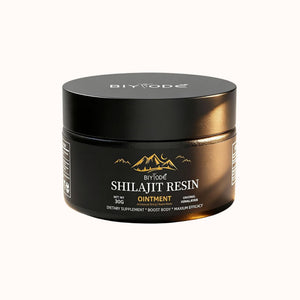
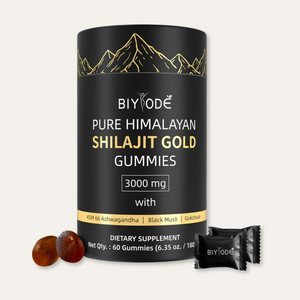
Gummies specifically solve the biggest practical problem with whole shilajit: taste and dosing convenience. Raw resin has an intense, bitter, earthy flavor that's genuinely difficult for most first-time users to get past, and it requires dissolving a pea-sized amount in warm water before use. A gummy delivers the same standardized shilajit extract in a pre-dosed, flavored, chewable format — no mixing, no strong taste, no measuring by eye.
What Should Actually Be Inside a Quality Shilajit Gut-Health Gummy?
Because the gut-health claims around fulvic acid are still developing, product quality matters more than usual here. Look for:
- A named, standardized shilajit extract rather than a vague "shilajit powder" — ideally with a stated fulvic acid percentage so you can compare potency across brands.
- Third-party lab testing, particularly for heavy metals. Because shilajit is derived from rock strata, unpurified or low-grade sources can carry meaningful contamination risk (lead, arsenic, mercury). A certificate of analysis from an independent lab (e.g., Eurofins) should test for exactly this.
- Transparent sourcing — a specific mountain region (Himalayan or Altai sources are the most commonly cited) rather than vague "ancient mineral resin" language.
- A short, recognizable ingredient list — extract, natural sweetener, a gelling agent (pectin or gelatin), and natural flavoring. Long lists of dyes, artificial preservatives, and fillers are a warning sign, not a feature.
- Reasonable, non-dramatic claims. Gut-repair claims that promise fast, dramatic transformation ("heal leaky gut in days") are a red flag; genuine effects, if present, are gradual.
How Shilajit Gummies Are Typically Used for Gut Support
Because the proposed mechanism (gut lining support, mineral availability, microbiome modulation) is a slow, cumulative process rather than an acute one, usage patterns reflect that:
- Daily consistency matters more than dose size. Most guidance suggests a standardized daily serving (commonly equivalent to a 300–500mg resin dose) taken at the same time each day.
- Start low if you're new to it. Some people prefer starting with a half-serving for the first few days to assess personal tolerance before moving to a full daily dose.
- Timing is flexible. Some people take it in the morning on an empty stomach; others take it with a meal. There isn't strong evidence that one timing is meaningfully superior for gut-related use, so personal tolerance and routine convenience are reasonable deciding factors.
- Patience is part of the process. Most anecdotal reports describe noticing changes — less bloating, steadier digestion, general "clearer" feeling — after several weeks of consistent use, not days.
Fulvic Acid and Probiotics: Should You Take Both?
If you're already taking a probiotic and wondering whether adding a shilajit gummy makes sense, it's worth separating two questions:
- Is there a plausible mechanism for them working together? Yes — a probiotic introduces bacterial strains, while fulvic acid's proposed role (supporting gut lining integrity and mineral availability) addresses a different part of the gut ecosystem. In principle, that's complementary rather than redundant.
- Is this combination proven in humans through robust clinical trials? Not yet, at scale. The idea is reasonable and consistent with existing microbiome science generally (a healthy gut lining and biome do support each other), but head-to-head or combination clinical trials specifically on shilajit-derived fulvic acid plus probiotics are limited.
The practical takeaway: taking both isn't unreasonable if you tolerate each well individually, but you shouldn't expect a shilajit gummy alone to "fix" a gut issue that hasn't responded to other interventions, and it's not a substitute for medical evaluation if you have persistent digestive symptoms.
Global Context: What the Data Shows
Source: Our World in Data — open global research and statistics (CC BY).

Healthy life expectancy — years lived in good health — diverges sharply from total lifespan in many regions. Cellular energy metabolism, including mitochondrial efficiency during sleep, is a foundational driver of the gap between living long and living well. Supporting the overnight ATP recharge cycle is one mechanism that may narrow that gap at the individual level.
Safety Considerations
- Contamination risk is the single biggest safety issue in this category. Because shilajit forms in mineral rock strata, unpurified or low-grade sources can carry heavy metals. This is exactly why third-party testing (not just brand claims) matters.
- Mineral load. Shilajit naturally contains iron and other minerals. Anyone with a condition affecting mineral metabolism (such as hemochromatosis), anyone pregnant or breastfeeding, or anyone managing a chronic condition should talk to a healthcare provider before starting.
- Medication interactions. Because fulvic acid has chelating properties, there's a theoretical interaction with certain medications, particularly chelation therapy drugs or medications that depend on specific mineral levels. If you're on prescription medication, check with your doctor or pharmacist first.
- Supplement regulation. Shilajit gummies are regulated as dietary supplements, not medications. That means manufacturers aren't required to prove specific health claims to a regulator before selling the product — which is exactly why independent lab testing and transparent sourcing matter more than marketing language when evaluating a brand.
- This is not a substitute for medical care. Persistent gut symptoms — chronic bloating, pain, changes in bowel habits, unexplained weight loss — deserve a conversation with a doctor rather than a supplement-only approach.

A Balanced Look at the Evidence
It's fair to say:
- Fulvic acid has documented antioxidant and mineral-chelating properties — this part is well established.
- Some recent studies (including animal, cell-culture, and smaller human research) have explored fulvic acid's effects on gut barrier markers and microbiome composition, with encouraging early results.
- Large-scale, well-controlled human clinical trials specifically testing shilajit or fulvic acid supplementation for conditions like leaky gut syndrome are still limited.
- Much of the specific language used in shilajit marketing ("repairs the wall," "unlocks nutrient channels," "removes toxins") is a simplified analogy for a proposed mechanism, not a direct quote of a clinical outcome. Read those framings as illustrative, not as proof of a guaranteed effect in every user.
None of this means shilajit gummies are ineffective — it means the honest, current answer is "promising and worth trying if you're generally healthy and want to experiment with your own routine," rather than "clinically guaranteed gut fix."
Conclusion
Gut health has become a crowded, probiotic-dominated conversation, but bacteria alone don't explain the whole picture — the environment those bacteria live in matters just as much. That's the underlying idea behind interest in fulvic acid, one of shilajit's primary active compounds: rather than adding new organisms, it's theorized to support the gut lining itself and improve the availability of the minerals your gut and its microbial population both depend on.
Shilajit gummies exist because raw resin, while effective, is genuinely difficult to take consistently — the taste, the mess, and the imprecise dosing are real barriers for most people. A well-formulated gummy, built on a standardized and third-party-tested shilajit extract, delivers the same active compounds in a format that's far easier to fold into a daily routine, and daily consistency is exactly what this category depends on to show any real-world effect.
At the same time, it's important to keep expectations grounded. The research behind fulvic acid and gut health is real and growing, but it hasn't yet reached the level of large-scale, definitive human clinical trials. Treat shilajit gummies as a reasonable, low-risk addition to a broader gut-health routine — good diet, adequate fiber, stress management, and medical care when needed — rather than a standalone fix. Choose a brand that's transparent about sourcing and lab testing, take it consistently, and give it the several weeks it typically takes to assess whether it's making a real difference for you.

"Sleep deprivation significantly alters ATP levels and energy metabolism in neuronal cells, suggesting that the restorative function of sleep is fundamentally tied to mitochondrial bioenergetics rather than simply elapsed rest time."
- Researchers, Journal of Neurochemistry, 2023 (PMID 37953684)
Experience the Biyode Difference
Pure, Eurofins-tested Products from the UNESCO-protected Golden Mountains of the Himalayas. 180,000+ customers across 33+ countries trust our quality.
What Our Customers Say on ★Trustpilot
 Verified
2026-07-21
Verified
2026-07-23
Verified
2026-07-22
Verified
2026-07-21
Verified
2026-07-23
Verified
2026-07-22
Frequently Asked Questions About Why 8 Hours of Sleep is Useless if Your Cells Can't Recharge
Does shilajit reduce the jitteriness from caffeine?
Will shilajit gummies cure my chronic fatigue?
How is a gummy different from raw resin for this purpose
Sources
- Clinical evaluation of purified shilajit on testosterone levels in healthy volunteers - Andrologia, 2016
- Heavy metal content and safety assessment of shilajit - Food and Chemical Toxicology, 2009
- Effect of shilajit on mitochondrial bioenergetics - Journal of Ethnopharmacology, 2012
These statements have not been evaluated by the Food and Drug Administration. This product is not intended to diagnose, treat, cure, or prevent any disease.