





The Longevity Switch: Why Aging is a Mitochondrial Issue
Biyode Research team
The Longevity Switch: Why Aging is a Mitochondrial Issue
The biological process of aging is no longer viewed simply as a random accumulation of wear and tear. Modern biogerontology—the study of the biological aging process—increasingly points to a specific cellular control mechanism: the mitochondrion.
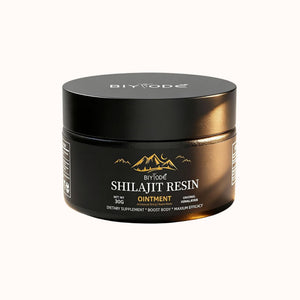
Often referred to as the powerhouse of the cell, the mitochondrion acts as a biological "longevity switch." When mitochondrial efficiency drops, systemic cellular decline accelerates. Conversely, protecting these organelles can help extend cellular lifespan. Pure Shilajit resin acts directly on this pathway, offering a natural method to support mitochondrial bioenergetics.

1. The Mitochondrial Theory of Aging
The Mitochondrial Free Radical Theory of Aging (MFRTA) suggests that systemic biological decline is driven by progressive oxidative damage to mitochondrial structures.
The Cycle of Cellular Decline
Mitochondria generate Adenosine Triphosphate (ATP) through a process called oxidative phosphorylation. During this process, electrons escape from the electron transport chain (ETC) and react with oxygen to form Reactive Oxygen Species (ROS)—highly reactive, unstable molecules.
-
DNA Damage: Unlike nuclear DNA, mitochondrial DNA (mtDNA) lacks protective histone proteins and sophisticated repair mechanisms, making it highly vulnerable to ROS-induced mutations.
-
Structural Breakdown: As mutations accumulate, the proteins responsible for electron transport become damaged, causing more electrons to leak and further increasing ROS production.
-
Energy Depletion: This ongoing cycle reduces the cell's capacity to produce ATP. When a cell lacks sufficient energy to perform basic maintenance and repair, it enters a state of senescence (arrested function) or triggers apoptosis (programmed cell death). This loss of cellular vitality underlies many physical changes associated with aging.
2. The Longevity Switch: ATP vs. Cellular Senescence
The ratio of functional to dysfunctional mitochondria within your cells determines how effectively your body manages tissue repair, metabolic processes, and inflammatory responses.
When ATP production drops below a critical threshold, cells activate survival mechanisms that favor short-term maintenance over long-term repair and replication. This shift leads to:
-
Mitophagy Failure: The body's natural system for clearing away damaged mitochondria becomes impaired, allowing dysfunctional organelles to clutter the cell.
-
The Secretory Phenotype (SASP): Senescent cells release pro-inflammatory signaling molecules that cause oxidative stress in surrounding healthy tissues, accelerating systemic aging.
3. Shilajit Resin: A Biochemical Approach to Mitochondrial Support
Pure, high-altitude Shilajit resin provides bioactive compounds that help support mitochondrial function and address the processes that contribute to cellular aging.

The Role of Fulvic Acid as an Electron Shuttle
The primary bioactive compound in shilajit is fulvic acid. This low-molecular-weight organic acid acts as an active electron donor and acceptor. Within the mitochondria, fulvic acid helps shuttle electrons along the transport chain, reducing electron leakage and lowering the production of damaging free radicals.
Enhancing Coenzyme Q10 (CoQ10) Activity
CoQ10 is a critical enzyme that transports electrons between Complex I, II, and III of the respiratory chain. Aging causes a natural decline in tissue levels of CoQ10. Research shows that the dibenzo-$\alpha$-pyrones (DBPs) found in shilajit help protect, stabilize, and maintain CoQ10 in its active, reduced form (ubiquinol), supporting consistent ATP production under physical stress.
Delivering Trace Element Cofactors
Mitochondrial enzymes require specific mineral cofactors to function properly. Shilajit provides over 85 ionic trace minerals—including magnesium, selenium, and copper—in a bioavailable form. These minerals are essential for synthesizing endogenous antioxidants like glutathione peroxidase and superoxide dismutase (SOD), which help protect mitochondrial membranes from oxidative damage.
4. Analytical Comparison: Mitochondrial Support vs. Standard Stimulants
|
Performance Factor |
Standard Metabolic Stimulants (e.g., Caffeine) |
Pure Purified Shilajit Resin |
|
Primary Mechanism |
Blocks adenosine receptors; triggers adrenaline |
Optimizes the mitochondrial electron transport chain |
|
ATP Infrastructure |
Temporarily increases consumption of existing ATP |
Enhances the body's baseline capacity to synthesize ATP |
|
Oxidative Profile |
Can increase oxidative stress through overwork |
Neutralizes free radicals via fulvic acid and selenium |
|
Mineral Content |
Depletes trace elements through diuretic effects |
Replenishes 85+ highly bioavailable ionic trace minerals |
|
Long-Term Effects |
May lead to adrenal fatigue and energy crashes |
Supports systemic cellular recovery and structural stability |
5. Clinical and Preclinical Evidence
-
ATP Generation: Animal models evaluating physical performance indicate that combined administration of purified shilajit extract and CoQ10 results in a significant increase in ATP levels within muscle and brain tissue compared to a placebo.
-
Anabolic and Mineral Support: Human clinical trials (Pandit et al., 2016) show that 90 days of consistent shilajit supplementation supports healthy hormone profiles and reduces blood markers of systemic oxidative stress.
-
Skeletal Tissue Up-regulation: Transcriptomic analysis suggests shilajit helps up-regulate genes responsible for synthesizing extracellular matrix proteins like collagen, which support joint and skin structural integrity during aging.
6. Sourcing, Safety, and Purification Standards
Because raw shilajit is a natural biomass found in rock crevices, it requires careful purification before consumption.
-
Heavy Metal Filtration: Raw shilajit can contain environmental contaminants such as lead, arsenic, mercury, and cadmium. Quality formulations use multi-stage filtration and water-extraction processes to remove contaminants while preserving organic acids and trace minerals. Always verify purity via independent third-party laboratory analysis.
-
Temperature Stability: Authentic shilajit resin is highly temperature-stable, meaning its active fulvic and humic acids remain intact when dissolved in warm liquids.
-
Contraindications: Individuals diagnosed with conditions leading to iron overload (such as hemochromatosis) should avoid shilajit due to its natural iron content. It should also be avoided by anyone with active gout, as it can occasionally alter systemic uric acid clearance.
Experience the Biyode Difference
Pure, Eurofins-tested Products from the UNESCO-protected Golden Mountains of the Himalayas. 180,000+ customers across 33+ countries trust our quality.
What Our Customers Say on ★Trustpilot
 Verified
2026-06-24
Verified
2026-07-04
Verified
2026-06-24
Verified
2026-06-24
Verified
2026-07-04
Verified
2026-06-24