



Shilajit Pure Gummies: The Complete 2026 Guide
Biyode Research team
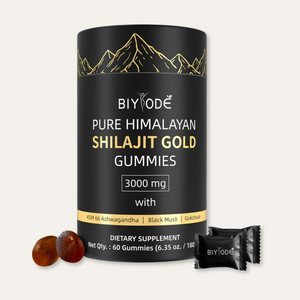
Shilajit has been used for centuries in traditional Ayurvedic and Siberian medicine, but for most people the biggest obstacle to actually taking it hasn't been whether it works — it's been the experience of taking it. Traditional shilajit resin is sticky, tar-like, and carries a strong bitter, smoky taste that many people find hard to get used to every day. That's the gap shilajit gummies are designed to fill: the same mineral-rich resin, reformulated into a convenient, chewable, better-tasting daily supplement.
This guide walks through what shilajit gummies actually are, what's inside them, how they compare to raw resin, what benefits are reasonably supported by research, and how to evaluate quality when you're shopping for a product.
What Is Shilajit?
Shilajit is a thick, mineral-rich substance that forms over centuries from the slow decomposition of plant matter compressed between layers of rock, primarily in high-altitude mountain ranges like the Himalayas and the Altai Mountains. As organic material breaks down under pressure and temperature changes, it produces a resin packed with humic substances, fulvic acid, and a wide range of trace minerals.
In traditional Ayurvedic medicine, shilajit is sometimes referred to as "the destroyer of weakness," and it has historically been used as a general tonic for energy, vitality, and healthy aging. Modern research has focused mainly on two components:
- Fulvic acid — a naturally occurring compound known for helping transport minerals and nutrients across cell membranes, and for its antioxidant properties.
- Dibenzo-α-pyrones (DBPs) — a class of compounds studied for their potential role in supporting mitochondrial function, the part of the cell responsible for producing energy (ATP).
It's worth being upfront that shilajit research is still a developing field. Much of the existing science comes from smaller studies, animal research, or traditional-use literature rather than large-scale human clinical trials. That doesn't mean the traditional uses are baseless — but it does mean claims should be read as "promising and traditionally supported" rather than "medically proven."
Why Gummies Instead of Resin?
Raw shilajit resin is effective, but it comes with real practical downsides:
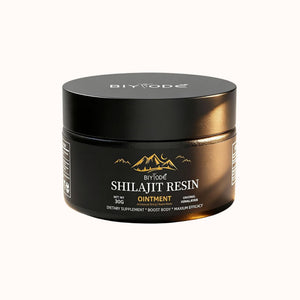
- Taste — Pure resin has an intense bitter, earthy, almost smoky flavor that most first-time users don't enjoy.
- Texture — It's sticky and tar-like, which makes measuring and dissolving it in water or tea a bit of a ritual rather than a quick daily habit.
- Portability — Resin needs to be portioned carefully (usually a pea-sized amount, roughly 300–500mg) and dissolved before use, which isn't practical when you're traveling or in a hurry.
- Consistency of dosing — Because resin is measured by eye or with a small scoop, dosing can vary from day to day.
Gummies solve each of these problems:
- Pre-measured doses — Each gummy typically contains a standardized amount of shilajit extract, so you know exactly how much you're getting every time.
- Palatable flavoring — Natural fruit flavors mask the bitterness of the resin without needing large amounts of added sugar in well-formulated products.
- No prep required — No dissolving, no water, no waiting — you simply chew and go.
- Easier travel and daily habit-stacking — A gummy fits into a routine the same way any other daily vitamin does, which tends to improve long-term consistency, and consistency is what matters most with shilajit since its benefits build over weeks rather than showing up overnight.
The trade-off is that not all gummies are created equal. Because the active resin has to be processed and blended into a gummy base, extraction method and concentration matter enormously (more on this below).

What's Actually Inside a Quality Shilajit Gummy?
A well-formulated shilajit gummy should list a standardized shilajit extract (sometimes labeled as PrimaVie®, or simply "purified shilajit extract") rather than vague "shilajit powder" or "mineral pitch" with no extraction detail. Look for:
- Fulvic acid content — reputable products often state a percentage (e.g., standardized to a minimum fulvic acid content) so you can compare potency across brands.
- Trace mineral profile — authentic shilajit naturally contains a broad spectrum of trace minerals (commonly cited figures range up to 80+ types) in ionic, more bioavailable forms.
- Third-party lab testing — because shilajit is sourced from rock strata, heavy metal contamination (lead, arsenic, mercury) is a real risk with low-quality or unpurified sources. Independent lab testing (for example, through labs like Eurofins) for heavy metals and microbial contaminants isn't a marketing nicety — it's a baseline safety requirement.
- Minimal fillers — a shorter ingredient list with recognizable components (extract, natural sweetener, pectin or gelatin, natural flavoring) is generally a better sign than a long list of gums, dyes, and preservatives.
What Are Shilajit Gummies Commonly Used For?
Based on traditional use and the current (still-limited) body of research, people typically take shilajit gummies for:
1. Energy and Fatigue
This is the most commonly cited traditional use. The theory centers on DBPs supporting the mitochondrial electron transport chain and helping recycle CoQ10, a compound involved in cellular ATP production. In plain terms: better-functioning mitochondria may mean more usable cellular energy, which is why shilajit is often framed as a fatigue-fighter rather than a stimulant — it doesn't work like caffeine, and there's no "kick" or crash.
2. Exercise Recovery
Intense training creates micro-tears in muscle tissue, transient oxidative stress, and temporary localized hypoxia (reduced oxygen availability) in working muscles. The recovery process depends on nutrient delivery, antioxidant support, and restoring normal oxygen and energy metabolism. Some early research has explored shilajit's potential role in each of these areas — as a mineral and nutrient transporter via fulvic acid, and as a mitochondrial support compound via DBPs. This is an area of genuine scientific interest, but it's also one where marketing tends to outpace the evidence; treat recovery-related claims as promising rather than settled science.
3. Healthy Aging and Antioxidant Support
Fulvic acid has documented antioxidant properties, meaning it can help neutralize free radicals generated by normal metabolism and exercise-induced stress. This is one of the more consistently supported effects across the shilajit literature.
4. General Vitality and Mineral Support
Because shilajit naturally contains a wide spread of trace minerals in a bioavailable ionic form, it's sometimes used as a broad mineral-support supplement rather than for one specific effect — similar to how someone might take a multivitamin for general wellness rather than to treat a single symptom.
It's worth noting what shilajit gummies are not: they are not a stimulant, they are not a substitute for a balanced diet or adequate protein intake, and they are not a fast-acting remedy. Most users report needing 2–3 weeks of consistent daily use before noticing changes in energy or recovery — which is exactly why the gummy format's convenience matters. A supplement you actually remember to take every day is more useful than a more "pure" product you abandon after a week because of the taste or the hassle.
How to Take Shilajit Gummies
Because gummies are pre-dosed, usage is simpler than with resin, but a few general guidelines apply:
- Follow the label's serving size. Reputable brands calibrate gummy dosage to deliver an equivalent active dose to a standard resin serving (commonly in the 250–500mg extract range per serving), so there's no need to "double up" for stronger effects.
- Timing: Many people take one serving in the morning for general energy and vitality support, or post-workout alongside a protein source if using it specifically for recovery support.
- Consistency over intensity: Because effects build cumulatively, a lower daily dose taken consistently is generally more useful than sporadic higher doses.
- With or without food: Shilajit doesn't require food to be absorbed, though some people prefer taking it with a meal to avoid any mild stomach sensitivity.
Global Context: What the Data Shows
Source: Our World in Data — open global research and statistics (CC BY).

Healthy life expectancy — years lived in good health — diverges sharply from total lifespan in many regions. Cellular energy metabolism, including mitochondrial efficiency during sleep, is a foundational driver of the gap between living long and living well. Supporting the overnight ATP recharge cycle is one mechanism that may narrow that gap at the individual level.
Shilajit Gummies vs. Resin vs. Capsules: A Quick Comparison
|
Factor |
Raw Resin |
Capsules |
Gummies |
|
Taste experience |
Strong, bitter, smoky |
Neutral (swallowed) |
Mild, flavored |
|
Dosing precision |
Variable (measured by eye) |
Fixed per capsule |
Fixed per gummy |
|
Convenience/travel |
Low (needs dissolving) |
High |
High |
|
Prep required |
Yes (dissolve in water) |
No |
No |
|
Onset of daily habit adherence |
Lower (taste is a barrier) |
Higher |
Highest |
|
Typical extract concentration transparency |
Varies by seller |
Usually labeled |
Should be labeled — verify |
Capsules and gummies are functionally similar in convenience; the main difference is user experience and, for some people, digestive comfort (chewable gummies bypass the "swallowing a pill" hurdle entirely).
How to Evaluate a Shilajit Gummy Brand
Given how much low-quality and even counterfeit shilajit exists on the market, here's a practical checklist before buying:
- Source transparency — Does the brand disclose where the raw shilajit is sourced from (e.g., a specific mountain region)? Vague sourcing claims are a red flag.
- Standardized extract, not just "shilajit" — Look for a named, standardized extract or a stated fulvic acid percentage.
- Third-party testing — Certificates of analysis (COAs) from an independent lab, ideally testing for heavy metals (lead, mercury, arsenic, cadmium) and microbial safety.
- Realistic claims — Be cautious of brands promising dramatic, fast results. Genuine shilajit benefits are gradual and modest, not overnight transformations.
- Ingredient simplicity — A clean label with recognizable ingredients beats a long list of artificial fillers, dyes, and preservatives.
- Sugar content — Gummies need some form of sweetener to offset shilajit's natural bitterness; check that sugar content is reasonable rather than excessive, especially if you're taking one daily long-term.

Safety Considerations and Who Should Be Cautious
Shilajit gummies are generally well tolerated when sourced from a reputable, tested brand, but a few points are worth keeping in mind:
- Unpurified or low-quality shilajit can contain heavy metals, since it's derived from rock strata. This is the single biggest safety risk in the category, and it's exactly why third-party testing matters more for shilajit than for many other supplements.
- Pregnant or breastfeeding individuals, and anyone with an existing kidney condition, hemochromatosis (iron overload), or a diagnosed medical condition, should check with a doctor before starting shilajit, since its mineral content (including iron) can be significant.
- Medication interactions — because shilajit may affect iron and mineral absorption, anyone on medication or with a condition affecting mineral metabolism should get personalized medical advice rather than relying on general guidance.
- Supplements aren't FDA-evaluated for efficacy in the way medications are. Shilajit gummies are regulated as dietary supplements, meaning manufacturers are responsible for safety and label accuracy, but the FDA doesn't verify health claims before products reach the market. This is a good reason to lean on third-party lab testing rather than marketing copy alone.
If you're new to shilajit, starting with a lower serving for the first few days to assess personal tolerance is a reasonable, low-risk approach before moving to the full labeled dose.
Frequently Asked Questions
How long until I notice effects? Most users report noticing changes in energy, recovery, or general vitality after 2–3 weeks of consistent daily use. Shilajit is not designed to produce an immediate, noticeable "hit" the way a stimulant would.
Can I take shilajit gummies every day? Yes — daily use is the standard and recommended pattern, since the compounds work cumulatively rather than acutely.
Do shilajit gummies taste like the resin? No. A well-formulated gummy is specifically designed to mask the bitter, smoky taste of raw resin with natural fruit flavoring, which is one of the main reasons people prefer the gummy format.
Are shilajit gummies as potent as the resin? It depends entirely on the brand's formulation. A gummy made with a properly standardized, concentrated extract can deliver a comparable active dose to resin — but a gummy made with diluted or low-grade shilajit will not. This is why checking for a standardized extract and stated fulvic acid content matters more than the format itself.
Is shilajit vegan or vegetarian? This depends on the gummy base used. Some gummies use gelatin (not vegan), while others use pectin-based formulas (vegan-friendly). Always check the ingredient label if this matters to you.
The Bottom Line
Shilajit gummies exist to solve a real, practical problem: raw shilajit resin works but is genuinely unpleasant for many people to take consistently, and consistency is exactly what shilajit's traditional benefits depend on. A well-made gummy — using a standardized, third-party-tested extract — can offer the same mineral and fulvic acid profile as resin in a format that's far easier to build into a daily routine.
That said, the category has real quality variance. Not every "shilajit gummy" on the market actually contains a meaningful, standardized dose of active shilajit, and the health claims around shilajit — while grounded in genuine traditional use and some promising early research — are not yet backed by large-scale human clinical trials. Approach dramatic marketing claims with healthy skepticism, prioritize brands that are transparent about sourcing and lab testing, and treat shilajit as a gradual, foundational supplement rather than a quick fix.
This article is for informational purposes only and is not medical advice. Consult a healthcare provider before starting any new supplement, especially if you are pregnant, breastfeeding, managing a medical condition, or taking medication.
" This article is for informational purposes only and is not medical advice. Consult a healthcare provider before starting any new supplement, especially if you are pregnant, breastfeeding, managing a medical condition, or taking medication.
- Researchers, Journal of Neurochemistry, 2023 (PMID 37953684)
Experience the Biyode Difference
Pure, Eurofins-tested Products from the UNESCO-protected Golden Mountains of the Himalayas. 180,000+ customers across 33+ countries trust our quality.
What Our Customers Say on ★Trustpilot
 Verified
2026-07-22
Verified
2026-07-23
Verified
2026-07-22
Verified
2026-07-22
Verified
2026-07-23
Verified
2026-07-22
Frequently Asked Questions About Why 8 Hours of Sleep is Useless if Your Cells Can't Recharge
Will shilajit gummies definitely raise my testosterone?
Can I take the gummy at the same time as my coffee, or should I space them out?
Will shilajit gummies definitely stop my hair from shedding?
Sources
- Heavy metal content and safety assessment of shilajit - Food and Chemical Toxicology, 2009
- Clinical evaluation of purified shilajit on testosterone levels in healthy volunteers - Andrologia, 2016
- Effect of shilajit on mitochondrial bioenergetics - Journal of Ethnopharmacology, 2012
These statements have not been evaluated by the Food and Drug Administration. This product is not intended to diagnose, treat, cure, or prevent any disease.